
When Concrete Became a Design Medium
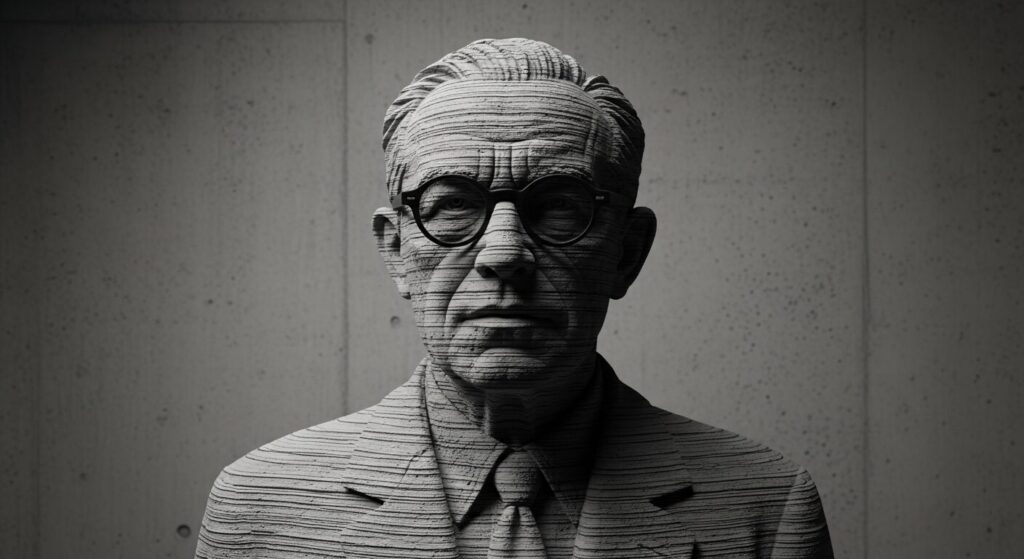
In the 1950s, Le Corbusier did something that looked like provocation: he left the concrete exposed. No coating, no plaster, no cover. He called it béton brut (raw concrete). The building makes no apology for what it is made of. From that came an entire movement. Brutalism built decades of architecture on one principle: concrete […]
Israel Is Building the Future of Construction. And It Isn’t Waiting for Anyone.
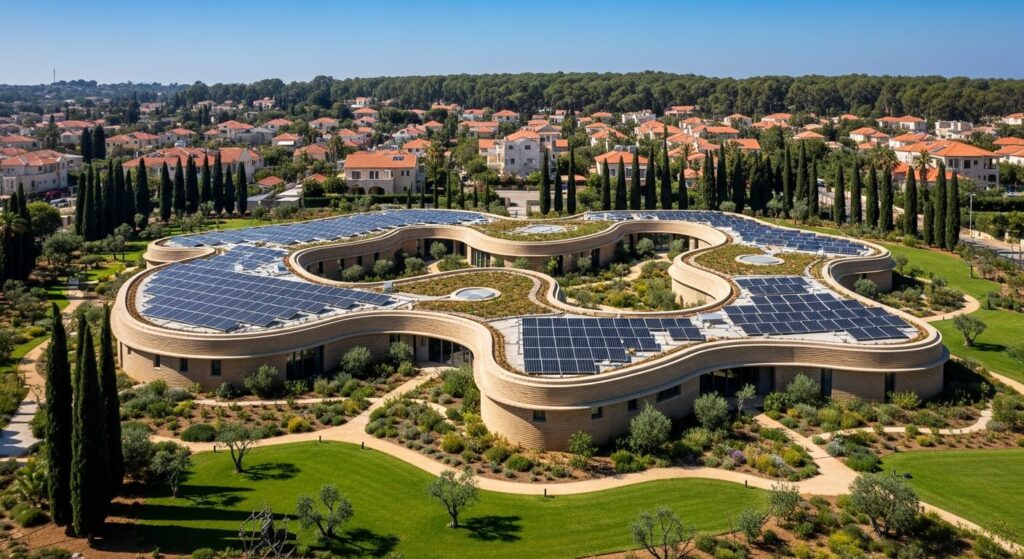
Dubai set a target: by 2030, 25% of all construction in the city will be 3D-printed. Saudi Arabia is pouring hundreds of billions into NEOM and entire neighborhoods built with methods that didn’t exist a decade ago. The Middle East is moving fast. So is Israel. Quietly, and all at once. In the past year, […]
When Tech Enters Construction: The New Worker the Industry Needs
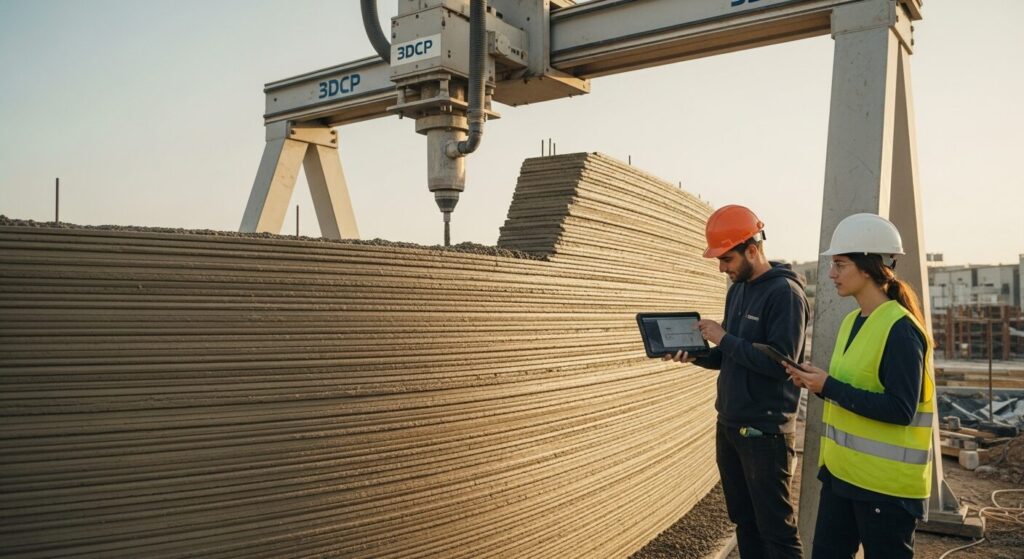
Construction doesn’t have a problem with the number of workers. It has a problem defining what the new worker should be. Israel experienced this sharply. Overnight, the industry lost tens of thousands of workers and many job sites shut down. The government’s response was to issue 61,000 new work permits from ten countries. Construction input […]
Peripheral Housing Development: Why the Economics Finally Work
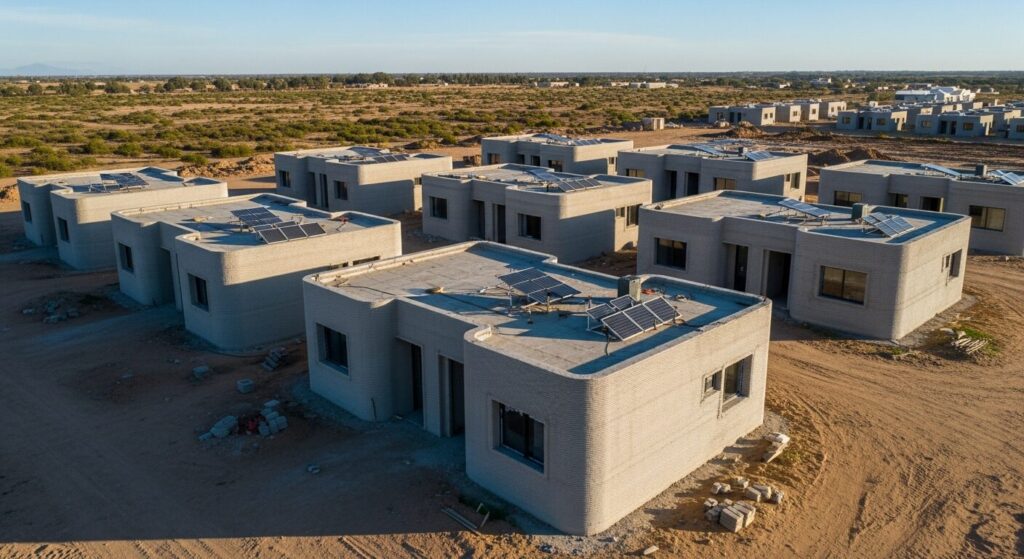
Land is available in Israel’s periphery. Everyone knows this. But anyone who has tried to develop there reaches the same conclusion: cheaper land doesn’t solve the problem. Because the problem was never the land. The problem is the cost of construction itself. A developer evaluating a housing project in a peripheral region always arrives at […]
The 3DCP Market Just Hit $1.49 Billion. Here Is What That Number Does Not Tell You.
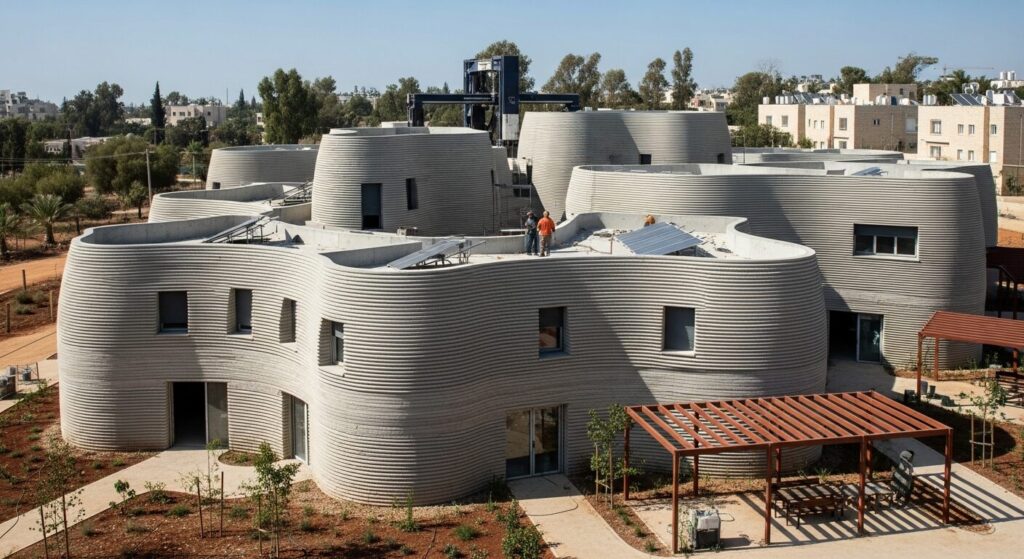
New market reports from April 2026 confirm it: the 3D concrete printing (3DCP) market has crossed $1.49 billion. By 2031, analysts project $17 billion, growing at a CAGR above 63%.1 The numbers are real. But they do not answer the question every contractor, developer, and investor actually wants answered: is the technology ready for real […]
A Technical Framework for 3D Concrete Printing (3DCP)
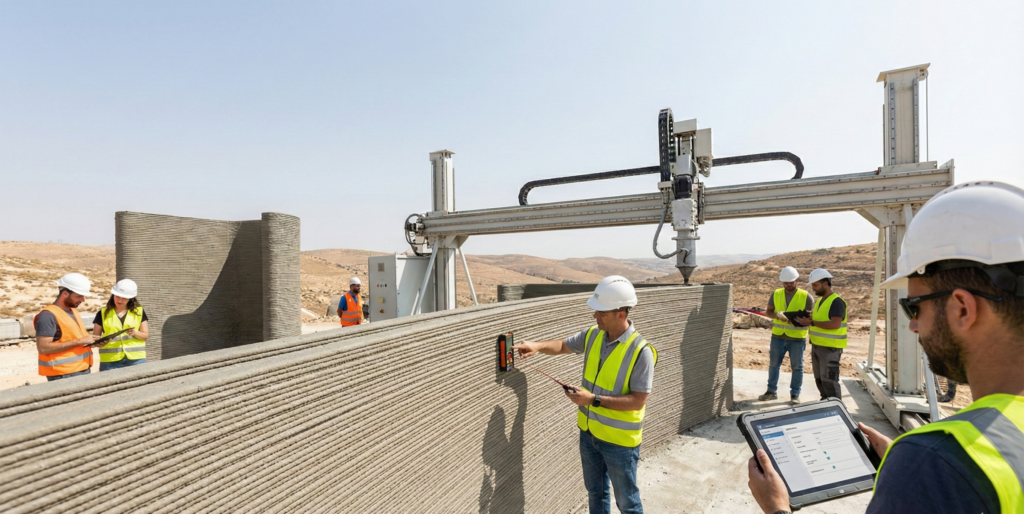
Executive Summary Laycon’s 3DCP framework optimizes structural completion by 87% through advanced material rheology and topology optimization. By achieving compressive strengths of 40–70 MPa and reducing material waste by 40%, our additive construction methodology meets rigorous international building codes while significantly lowering the carbon footprint. This technical approach ensures that the future of construction is […]